 GARDEN & YARD
Upright Compost Bin
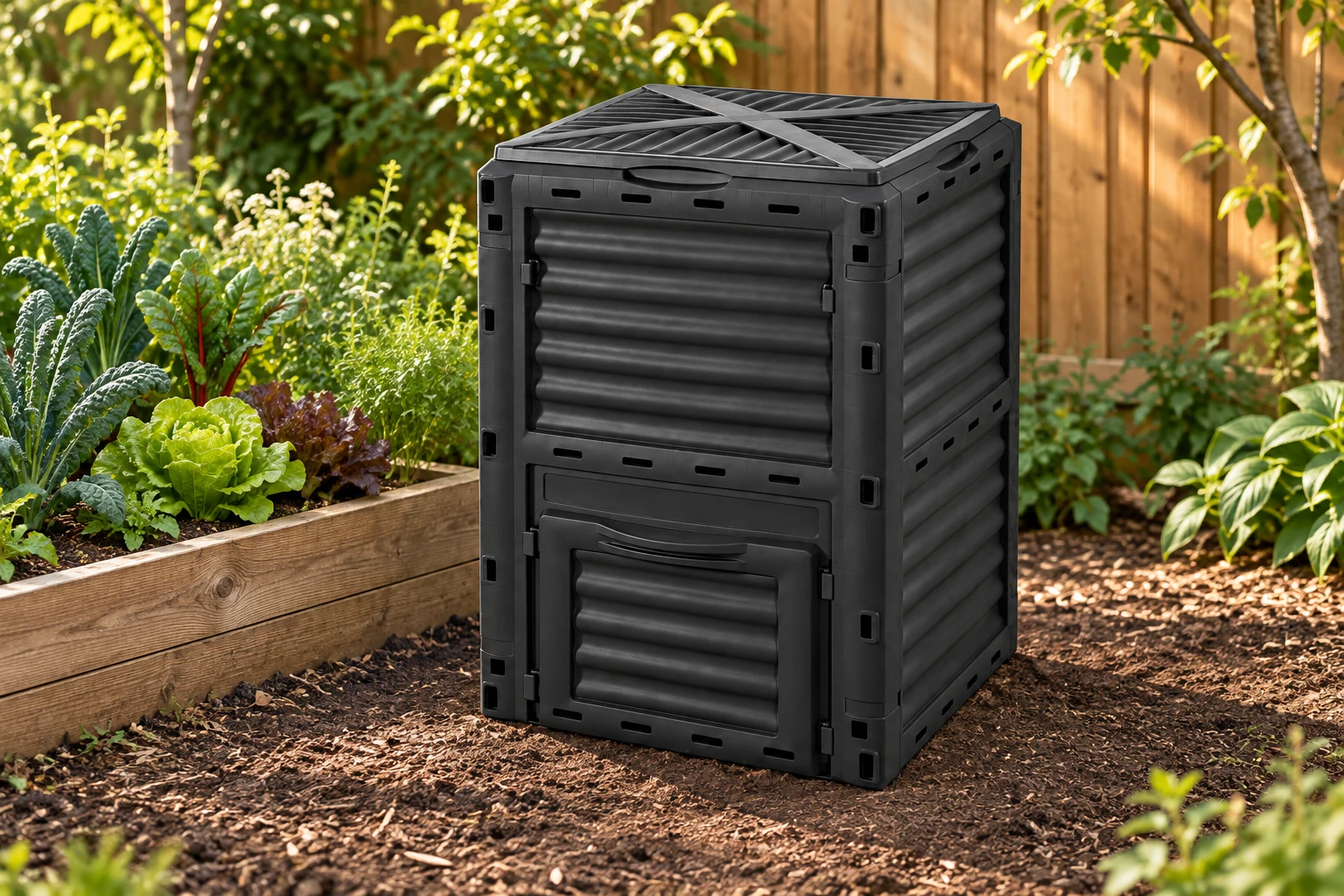
An upright bin for your backyard routine. Add from the top and reach compost through the front panels.
FROM SCRAPS TO SOMETHING GOOD
Yesterday’s kitchen scraps.
Tomorrow’s thriving garden.
FIND YOUR COMPOSTING SETUP
A backyard bin or a turn-and-mix tumbler.
Start with the routine that feels right for you.
GARDEN & YARD
An upright bin for your backyard routine. Add from the top and reach compost through the front panels.
 ROTATE & MIX
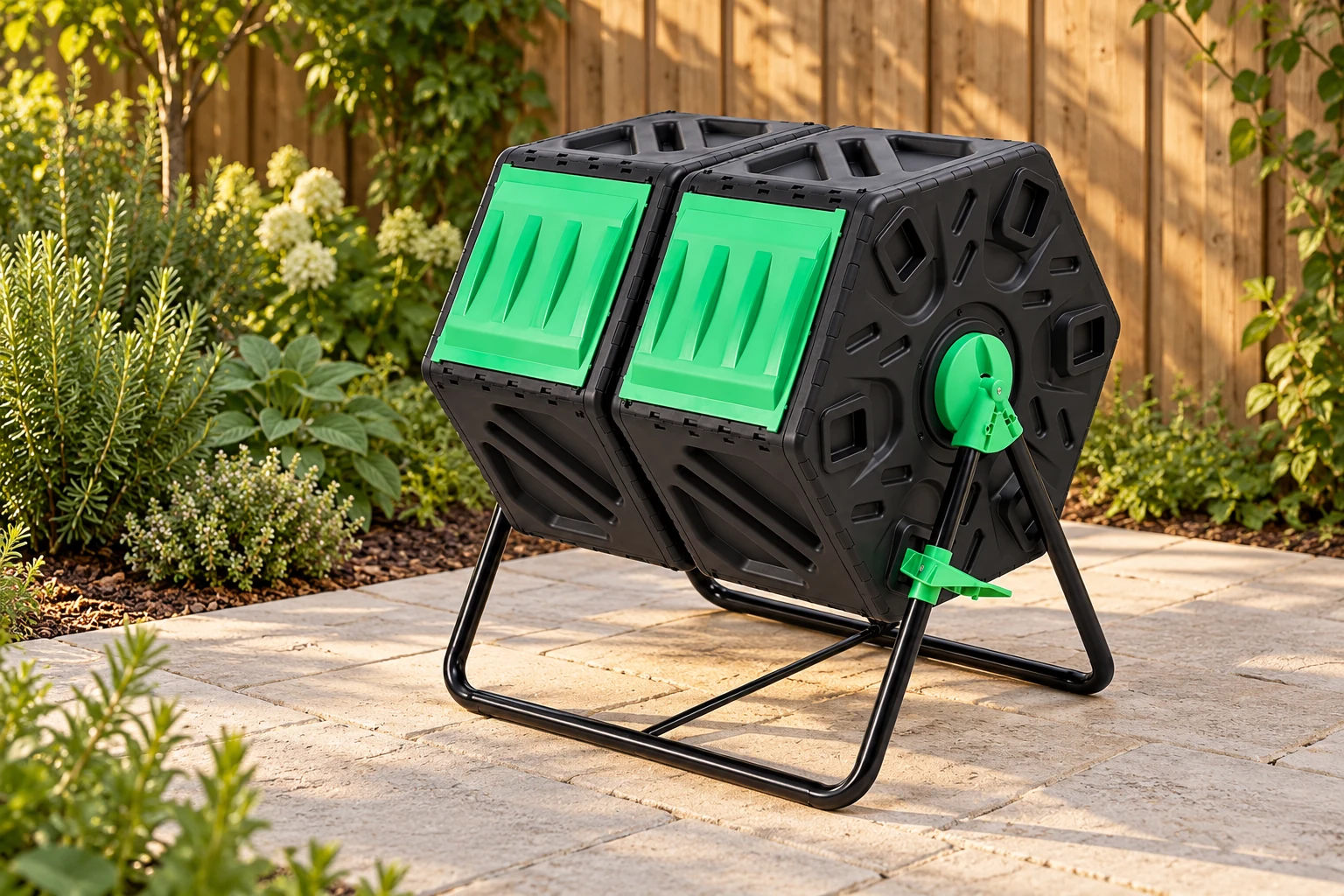
Two chambers, one frame. Keep material in separate compartments and turn the drums to mix.
Looking for a different fit?
AI-generated scene illustrations based on our product references.
THE FULL COLLECTION
8 models. Three ways to compost.
300 L / approx. 79.3 US gal
A stationary backyard bin with a top lid and two front access panels.
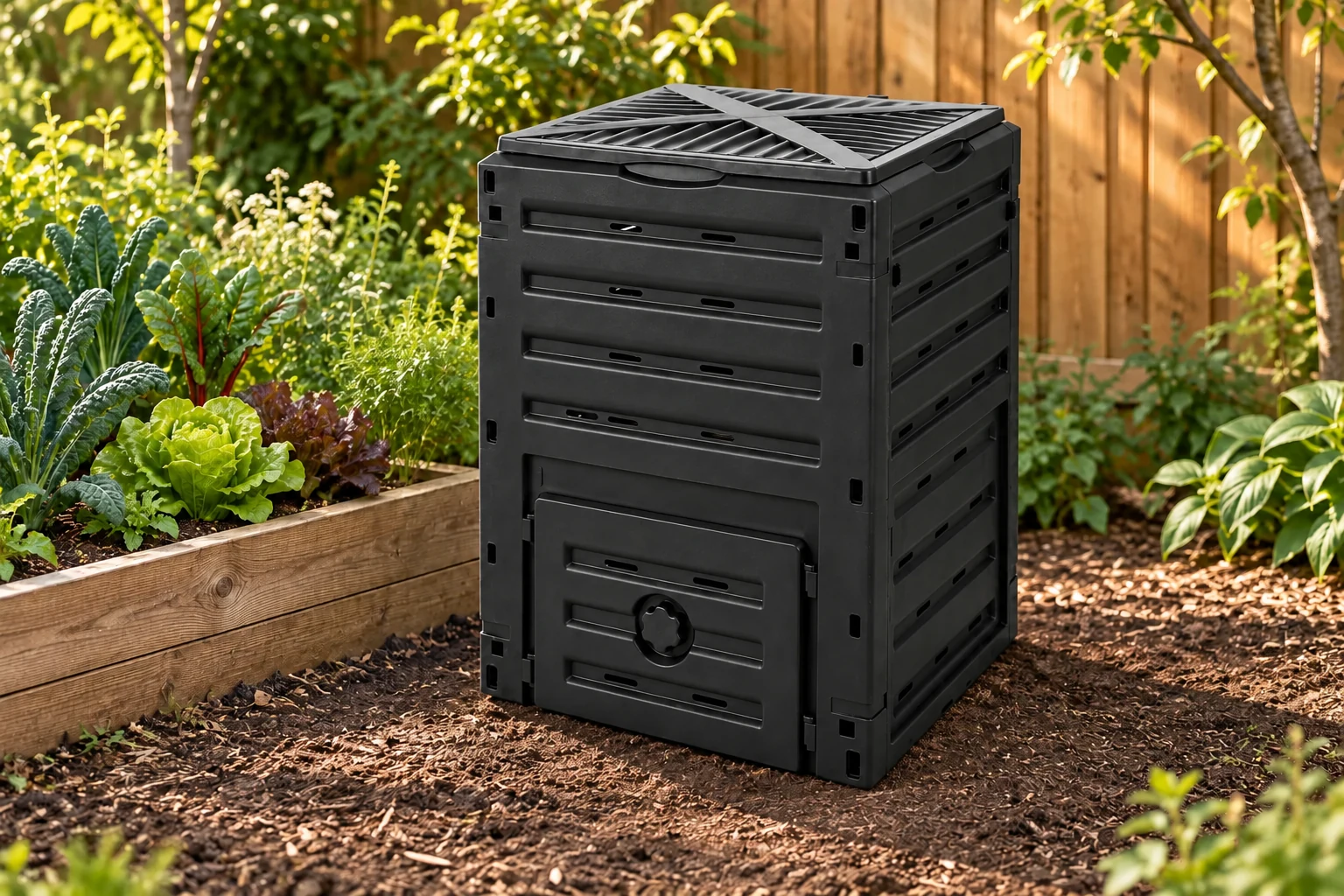
300 L / approx. 79.3 US gal
A slotted upright bin with a lower access hatch and round door handle.
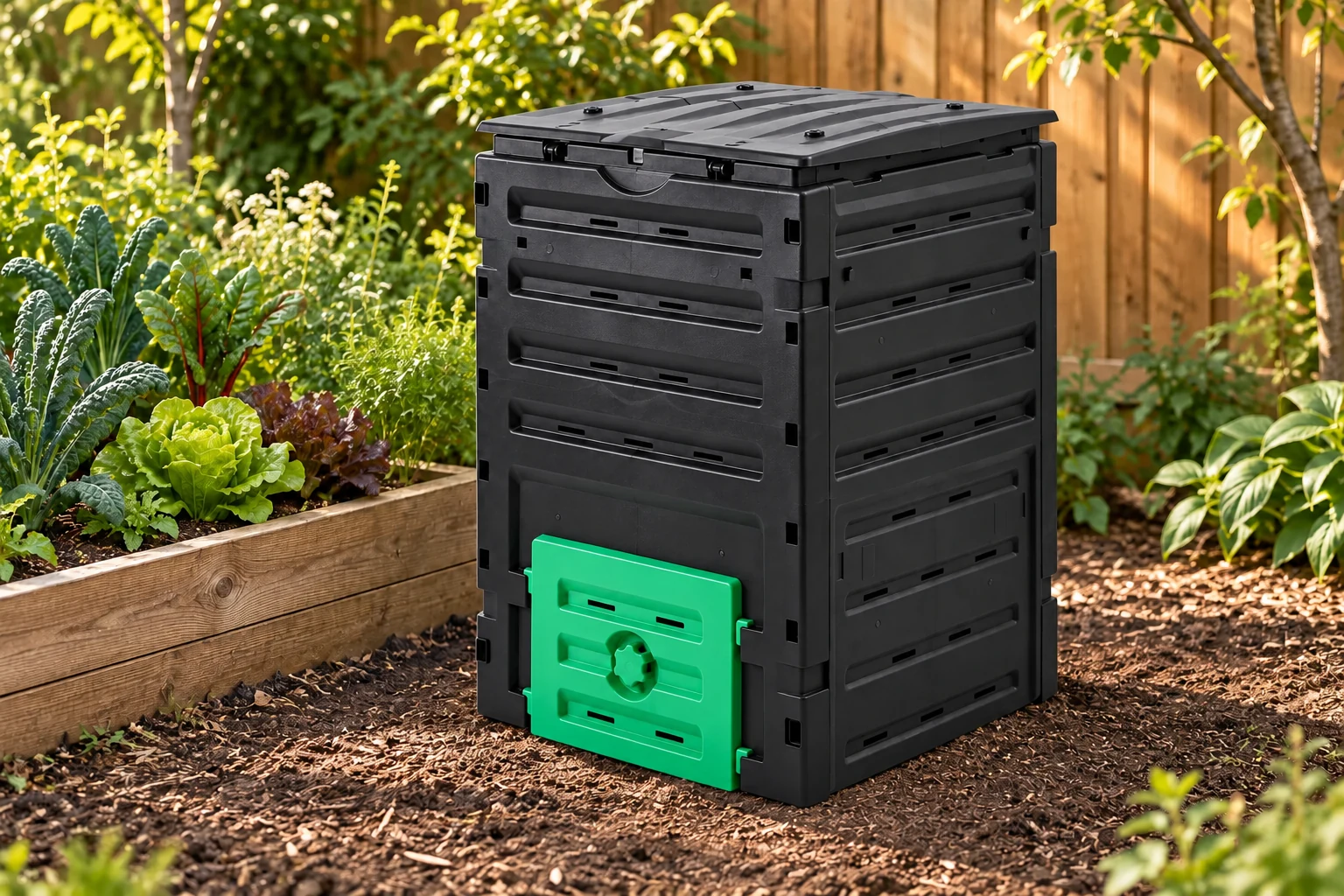
450 L / approx. 118.9 US gal
A taller, larger-capacity upright bin with a green lower harvest hatch.
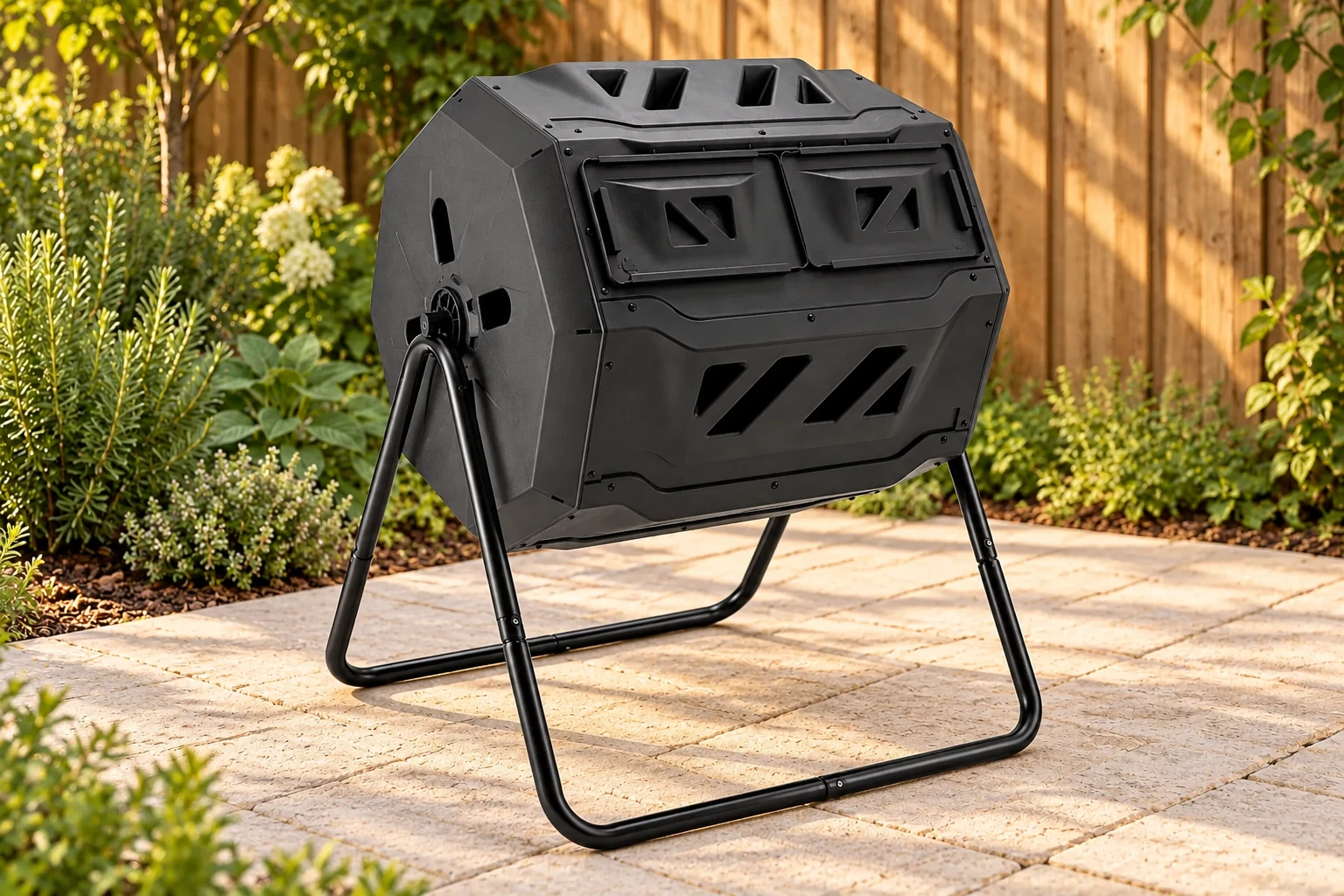
160 L / approx. 42.3 US gal
A rotating polygonal drum with two sliding doors on a raised tubular stand.
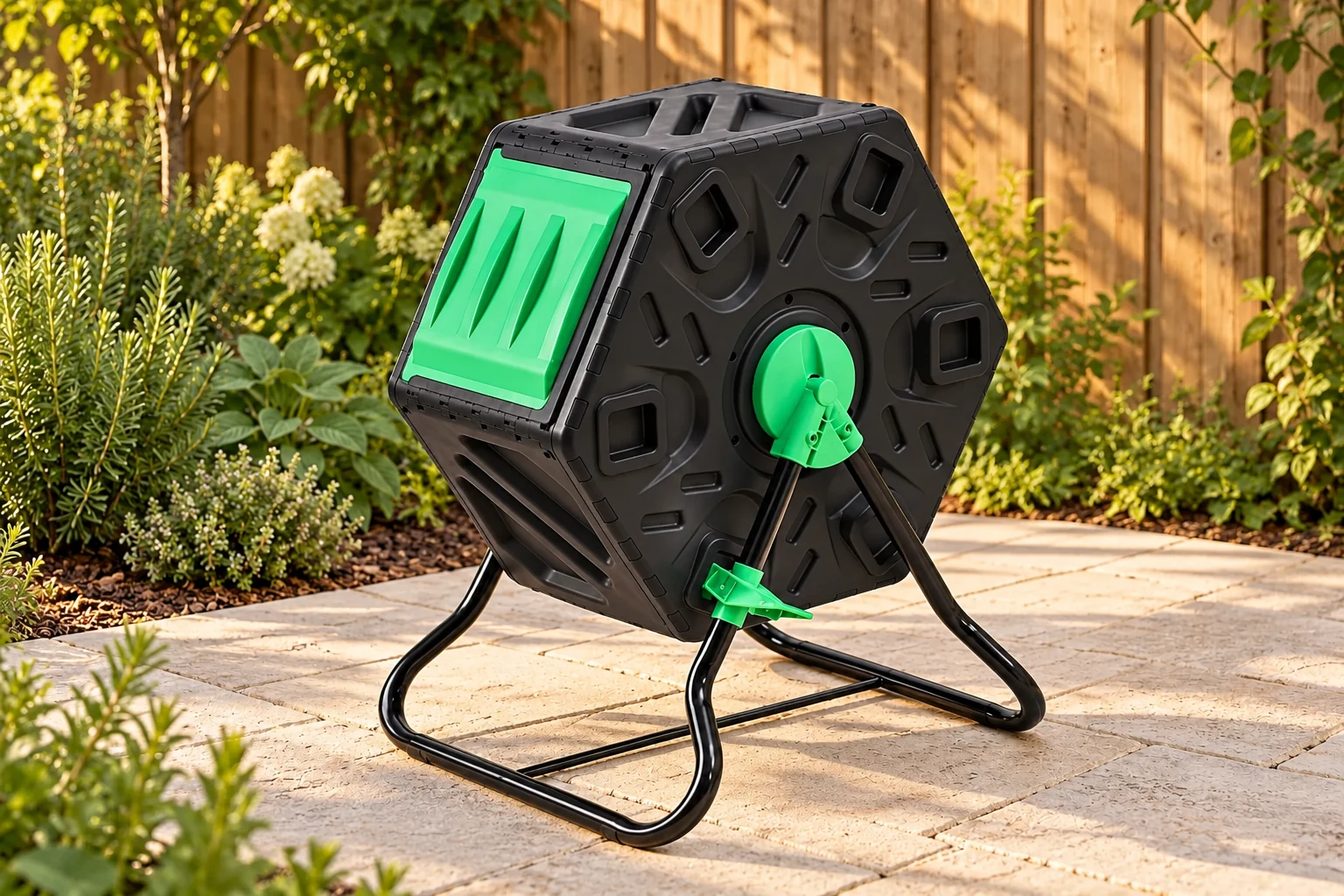
65 L / approx. 17.2 US gal
A compact single-chamber tumbler with a green sliding lid and side locking control.
130 L / approx. 34.3 US gal
Two adjacent rotating chambers with green lids on one shared tubular frame.
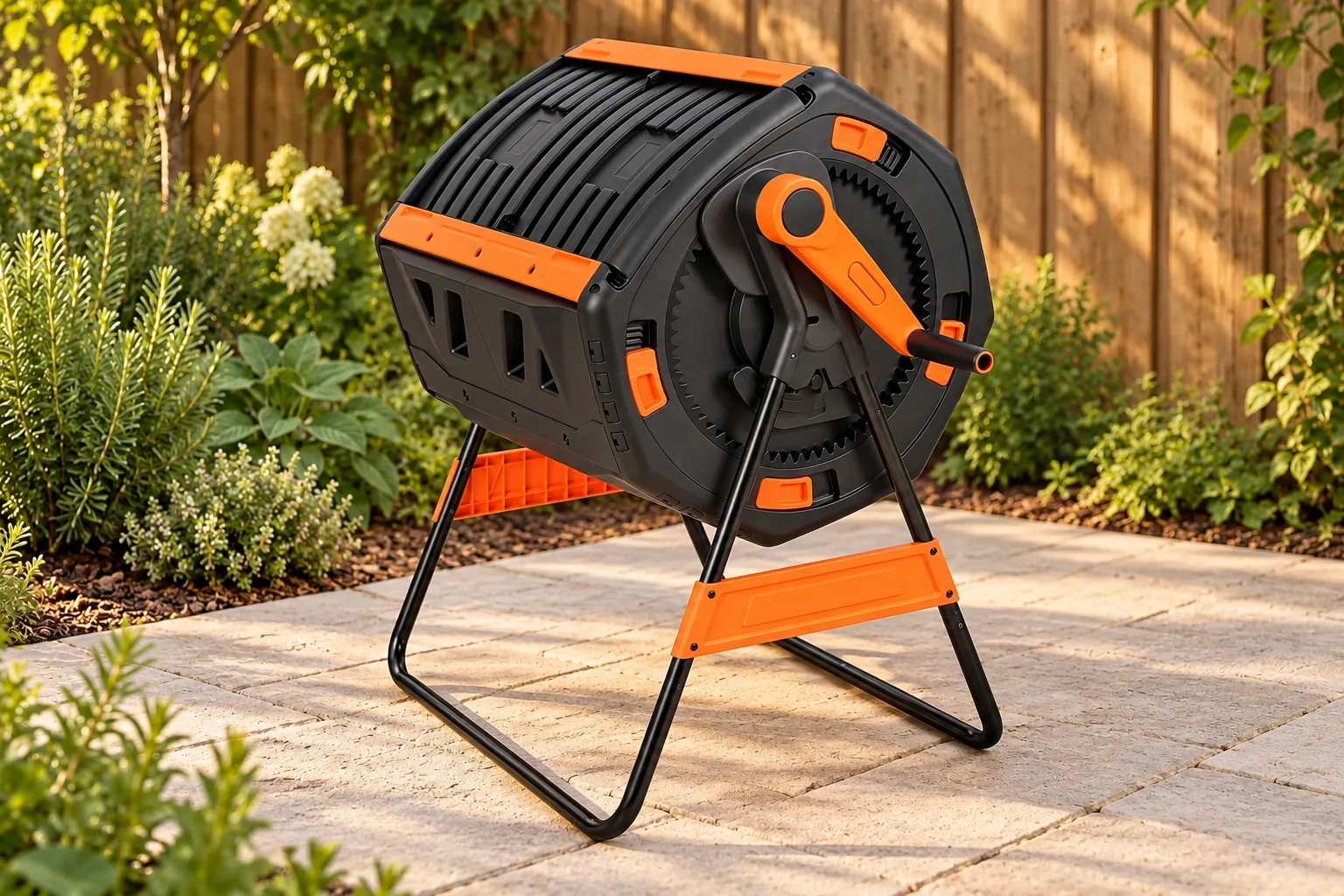
200 L / approx. 52.8 US gal
A large round drum with an orange hand crank, side gear, and matching frame accents.
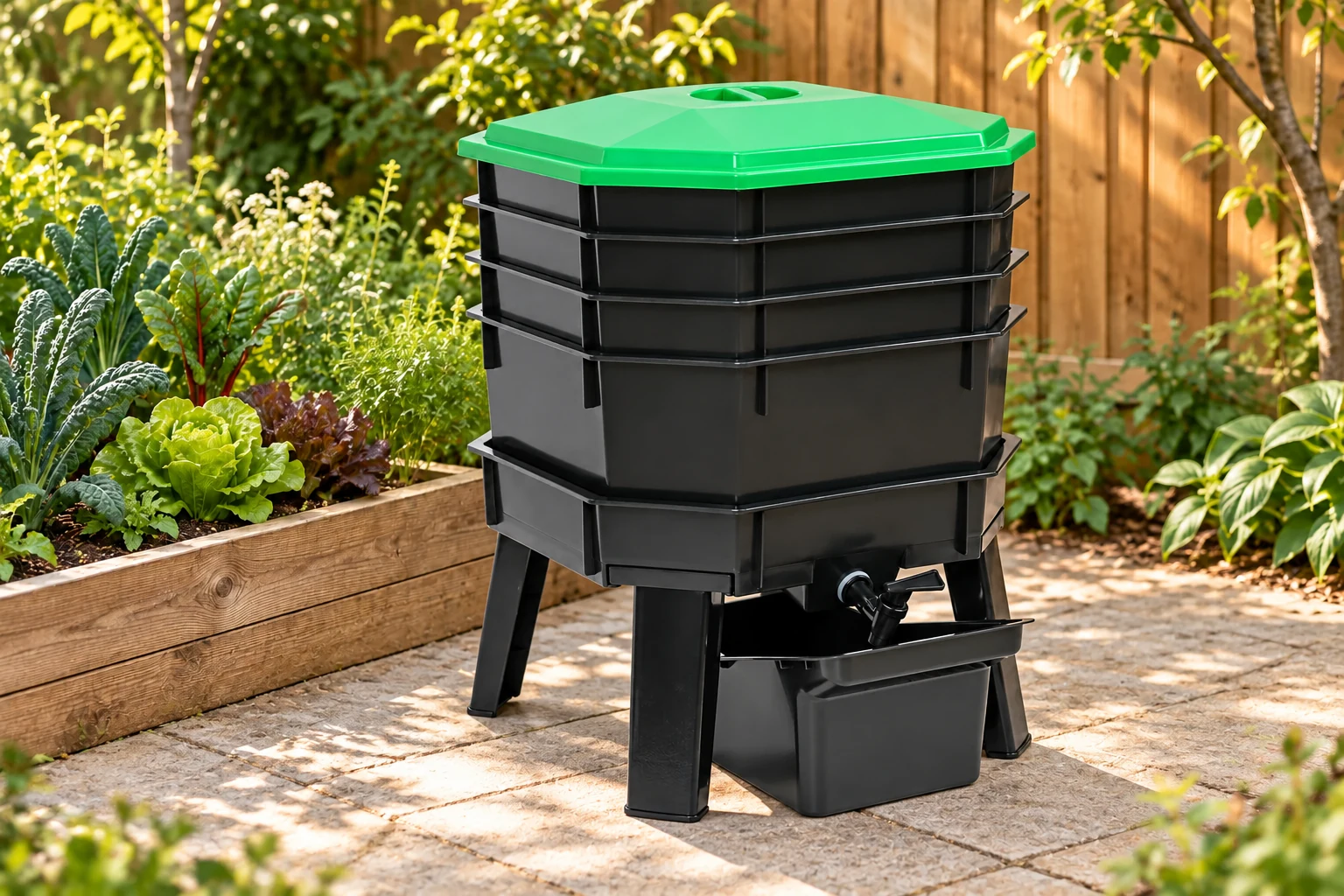
28.3 L / approx. 7.5 US gal
A compact worm-composting system with stacked trays, a green lid, and a lower drain tap.
Explore designs, capacities and dimensions. Product images are AI-generated from supplied references.
THE EVERYDAY LOOP
No plug. No app. Just a little attention
and a whole lot of nature.
Fruit peels, vegetable scraps, coffee grounds, and garden clippings all have another chapter.
FROM YOUR KITCHENMix fresh scraps with dry leaves or shredded plain cardboard. Keep it damp and give it some air.
IN YOUR COMPOSTERWhen the compost is dark, crumbly, and earthy, let it finish curing before working it into your soil.
BACK TO THE SOILCOMPOSTING 101
Start with about two parts dry “browns” to one part fresh “greens” by volume, then adjust as your pile changes.
A few more things to knowBreak up large pieces and cover fresh food scraps with a layer of browns.
Keep some browns near your bin so every batch of kitchen scraps gets a dry companion.
“Compostable” packaging may need an industrial facility. Check its instructions before adding it.
A DIFFERENT WAY TO LOOK AT LEFTOVERS
Not the end.
The beginning.
Every peel, every leaf, every little effort.
It all comes back around.
GOOD QUESTIONS
New to composting? Start here.
It usually takes several months, depending on temperature, the size of your materials, moisture, and how often you mix. It is ready when it looks dark and crumbly, smells earthy, and the original food scraps are hard to recognize. Let it cure before use.
A balanced pile should smell earthy. A sour or strong smell often means too much moisture or too many fresh scraps. Add dry browns and mix to let air in. Avoid meat, dairy, and oily foods.
For upright bins, choose a level, well-drained outdoor spot on bare soil and leave room for the lid and hatch. Tumblers need a stable, level surface and room to rotate. Check the setup instructions for the worm farm before choosing its location.
Yes, but decomposition slows in cold weather and may pause when the pile freezes. Keep adding an appropriate balance of scraps and browns, and expect the pile to become more active as temperatures rise.
Ordinary outdoor bins and tumblers do not require purchased worms. The stackable worm farm is a different setup; follow its worm-composting instructions. Worms are not confirmed as included with model 484.
Compare composter designs, capacities and dimensions, then explore practical guides for starting and maintaining a backyard composting routine.
scraptoearth JOURNAL
Start an outdoor compost bin with a practical guide to choosing a location, collecting ingredients, building a routine, and recognizing finished compost.
Learn which compost ingredients count as greens or browns, a useful starting ratio by volume, and how to adjust moisture and airflow in an outdoor bin.
Troubleshoot a smelly outdoor compost bin by checking excess moisture, poor airflow, too many fresh scraps, and uncovered food before adjusting the pile.
YOUR NEXT CHAPTER STARTS OUTSIDE.