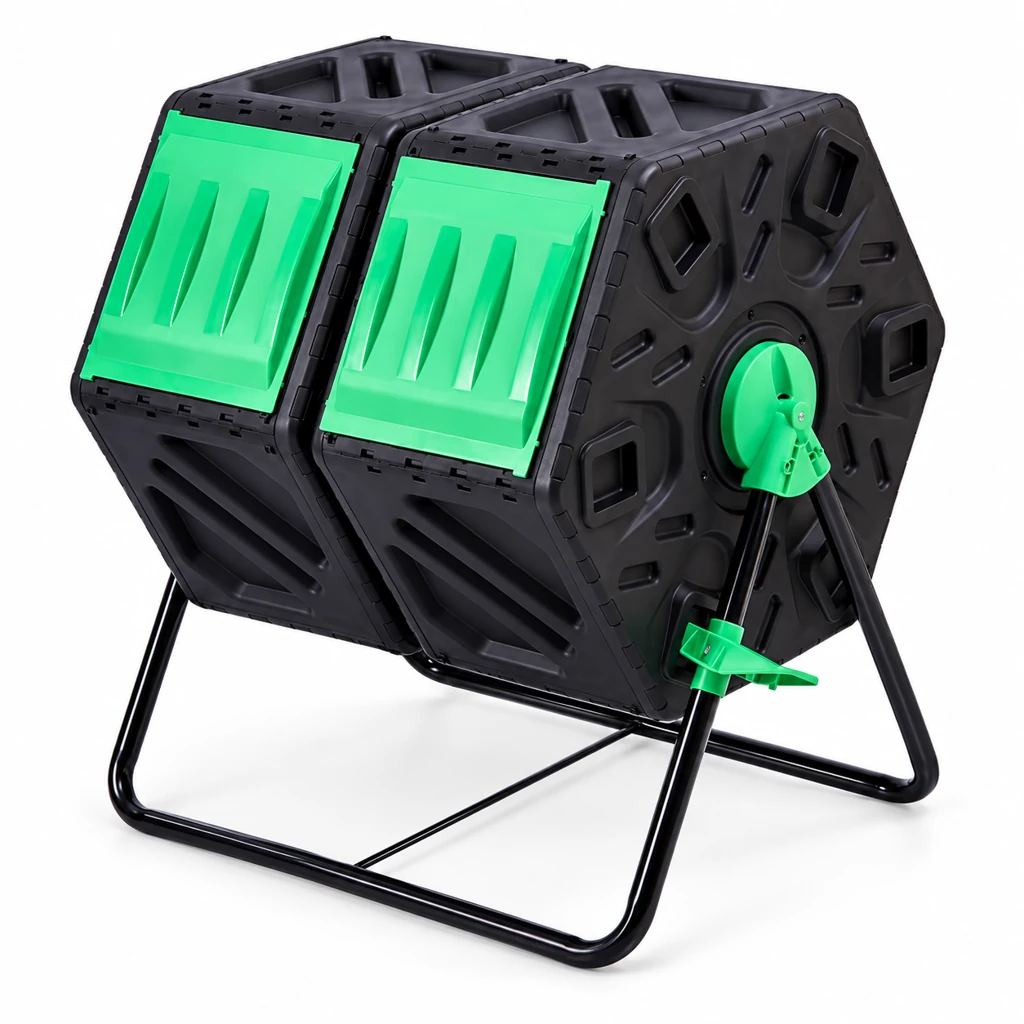
Two sliding access doors
Separate access doors make the drum openings easy to identify.
AI-generated display image based on the supplied product reference.
← Back to all compostersGIVE YOUR SCRAPS A NEW TURN.
160 L / approx. 42.3 US gal · Model 436
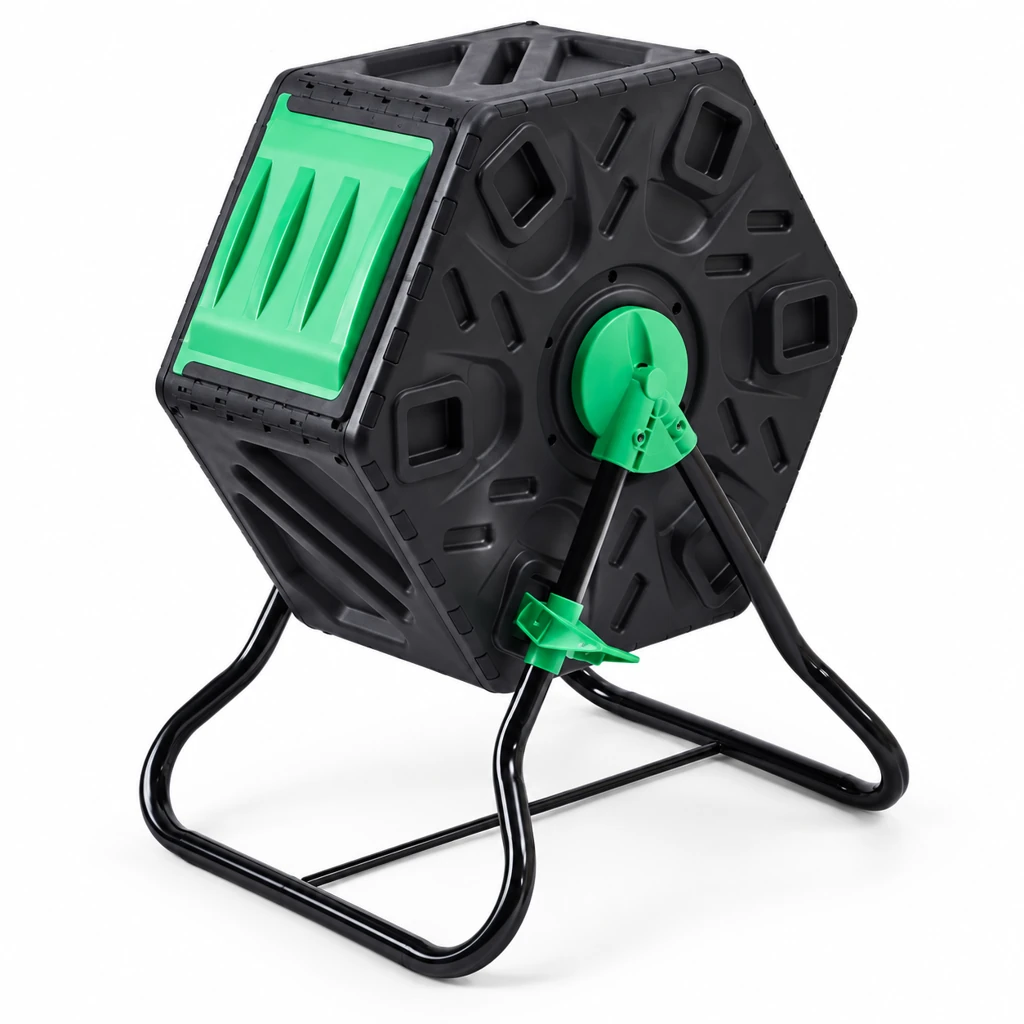
A rotating polygonal drum with two sliding doors on a raised tubular stand.
Explore models Viewing: 436
Color: Black
Supplier dimensions are approximate. Check the space needed around the product as well as its footprint.
Choose a firm, level outdoor surface. Allow clearance around the frame so the drum can turn.
Use the dimensions and placement guidance to plan your space. Assembly details and package contents should be checked against the model’s documentation.
This collection introduces composter designs and their reference specifications. Browse the model pages to compare capacity, footprint and how each design works.
THE DETAILS THAT MAKE THE DIFFERENCE
Separate access doors make the drum openings easy to identify.
Turn the drum to mix its contents.
The tubular frame holds the drum above the ground.
GETTING STARTED
Model 436 · 160 L / approx. 42.3 US gal
Choose a firm, level outdoor surface. Allow clearance around the frame so the drum can turn.
Use the drum’s access opening to add composting material, then close it before turning.
Use the rotating drum to mix. Composting time depends on your materials and conditions.
A LITTLE KNOW-HOW
Get to know your composter before you choose.
Read the starter guideModel 436 measures approximately 28.7 × 24.8 × 36.6 in (73 × 63 × 93 cm), in length × width × height. Choose a firm, level outdoor surface. Allow clearance around the frame so the drum can turn.
Each model has its own capacity, dimensions and design. Use the model choices above or compare the product pages to find the right fit for your space.
Visit the scraptoearth Journal for guides to getting started, balancing greens and browns, and troubleshooting common composting problems.
Explore the journal →The display image is AI-generated from the supplied product reference. The illustration helps explain the model’s design. Actual appearance, package contents and assembly details should be checked against the model’s documentation.