
Getting started
What Can You Compost? A Beginner’s Checklist
Start with a short, reliable ingredient list rather than trying to compost everything at once. This checklist is for an ordinary outdoor home bin, not a municipal collection program or a specialized food-waste system.
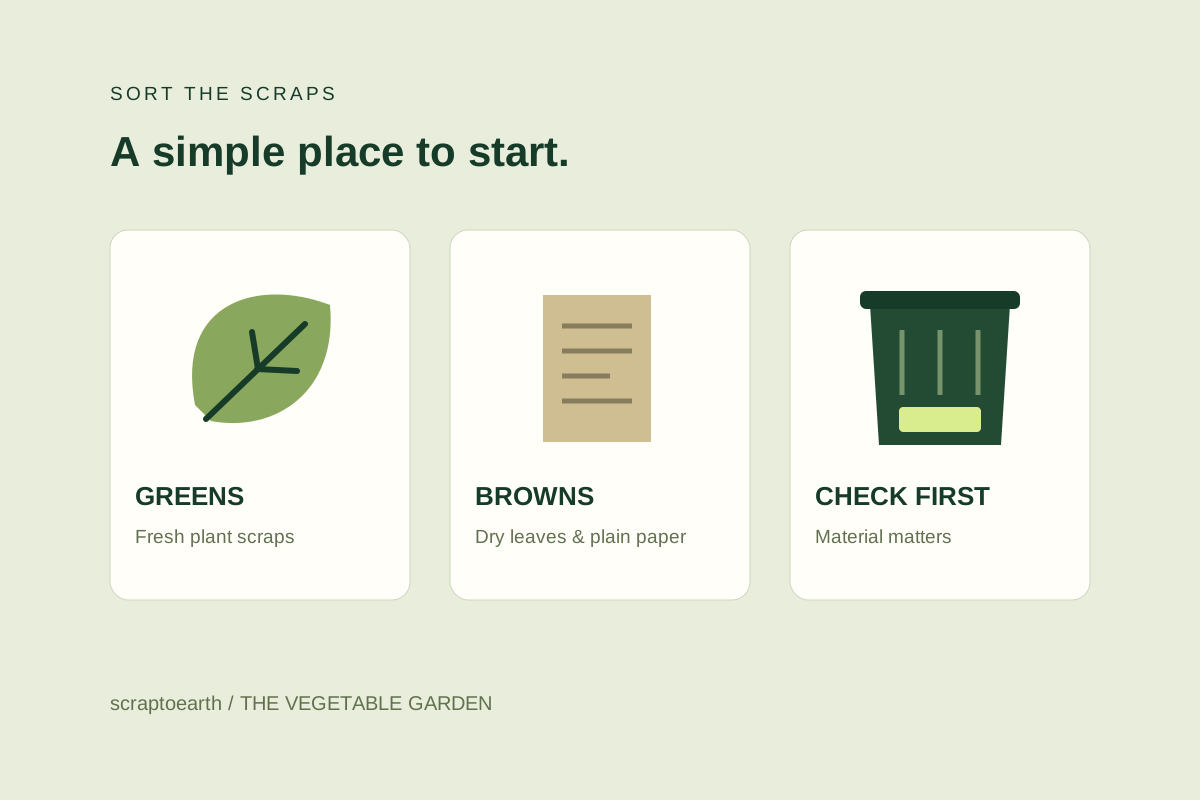
Begin with familiar kitchen and garden materials
The EPA’s backyard ingredient list includes fruit and vegetable scraps, coffee grounds and paper filters, dry leaves, and suitable shredded paper or cardboard. Remove produce stickers and packaging before the scraps reach your collection container.
| Material | Preparation |
|---|---|
| Vegetable peelings and fruit scraps | Remove labels; cut large pieces |
| Coffee grounds and paper filters | Remove pods and plastic parts |
| Dry leaves | Keep a supply beside the bin |
| Plain cardboard | Remove tape; tear into pieces |
Use the compost material checker when a particular item does not fit these examples. Check the exact material, rather than treating the name of a whole product as a composting instruction.
Put these items in a check-first category
Tea bags need a closer look. University of Maryland Extension notes that many contain plastic. Empty the leaves into the bin if you cannot confirm the bag material; dispose of the wrapper and string components appropriately.
Garden trimmings also need sorting. UConn Extension includes small amounts of grass clippings mixed with leaves, but excludes diseased plants and aggressive weeds with mature seeds from a simple home system. Ask about herbicide use before accepting lawn material from someone else. Keeping an uncertain batch separate is easier than retrieving it after mixing.
Keep the first system conservative
Leave meat, fish, bones, dairy, grease, pet waste and cat litter out of this routine. EPA also excludes treated wood, glossy paper and compostable service ware from its ordinary backyard list. A commercial facility may accept materials that a home bin cannot handle; follow that facility’s actual rules.
Do not use a warm patch inside the bin as evidence that every part has been sanitized. Oregon State University Extension explains that add-as-you-go composting does not heat sufficiently to kill diseases and troublesome weeds. Choose ingredients accordingly from the start.
Make sorting easy at the point of use
Try a two-container routine for one week. Label the kitchen container “fruit, vegetables, coffee.” Label a nearby outdoor container “dry leaves and prepared cardboard.” Place a small reject container beside your preparation area for stickers, twist ties and tape.
At the end of the week, note which items caused uncertainty. Look those up individually and add a clear household instruction to your checklist. If several people use the kitchen, agree on the same short list before expanding it. A photograph of your own sorted materials can become a useful reminder inside a cupboard door.
Connect the checklist to a manageable routine
After deciding what goes in, review greens and browns and where to place the bin. Ingredient suitability and pile condition are separate questions: a bin can contain suitable ingredients and still need a moisture or airflow adjustment.
When something changes, record the recent additions before changing your method. The compost troubleshooter helps organize that inspection. Keep this checklist short enough to use every day, and expand it only when you understand the next material.
Written for ordinary outdoor home composting. Ingredient guidance and timing can vary with your climate and setup; linked public resources provide further detail.