
Getting started
Where Should You Put a Compost Bin?
The best location is one you can reach and maintain throughout the year. Walk the route with an empty scraps container before choosing the quietest-looking corner of the yard.
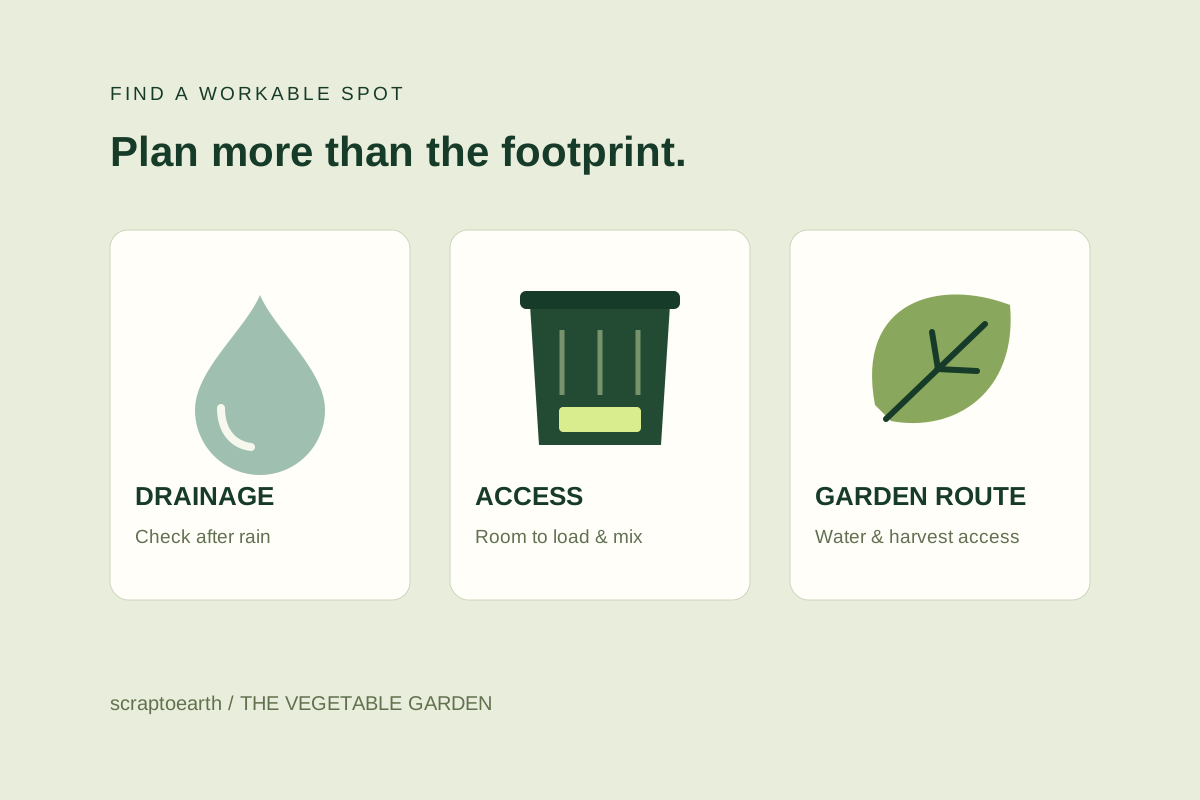
Start with drainage and everyday access
The EPA recommends a well-drained location, year-round access, a nearby water supply and space away from a fence. Sun or shade can work. Those practical conditions matter more than finding one supposedly perfect compass direction.
Visit candidate spots after rain. Look for puddles, a slippery route or water draining toward the proposed bin. Then consider the trips you will make with scraps in one hand and a lid to open. A location that feels awkward during a quick trial is worth reconsidering before the bin is full.
Measure the working area, not only the footprint
Penn State’s home composting guide emphasizes access for turning and proximity to materials and water. It also advises protecting the pile from drying wind and constant sun.
Mark the proposed bin outline temporarily, then rehearse these tasks:
- Open the lid fully without hitting a wall or branch.
- Reach the material with your intended mixing tool.
- Place a container beside the harvest opening.
- Move the finished material toward the vegetable beds.
- Reach stored browns without blocking the path.
For a tumbler, account for the complete rotation and space to unload beneath or beside it. Check the actual equipment instructions for surface and clearance requirements. A footprint measurement alone cannot show how the setup will work.
Check the ground, structures and local rules
Illinois Extension’s home composting guidance favors flat, well-drained ground, recommends checking local ordinances, and warns against locating a pile directly against a building or fence. It also suggests avoiding large trees because their roots may enter the compost.
For an open-bottom bin, follow the installation instructions for the base and any pest barrier. A raised tumbler needs a stable supporting surface. Do not assume the two systems need an identical foundation. If you rent, share a garden or belong to a homeowners association, confirm the applicable placement rules before settling on a spot.
Evaluate the same place in another season
Make a short seasonal checklist for the candidate location. Ask whether snow could block the lid, where roof runoff goes, and whether the hose still reaches when the garden is planted. Illinois Extension notes that a very sunny or windy position may require more attention to moisture.
You do not need to predict every weather event. Choose a convenient route, identify an alternative collection plan for inaccessible days, and leave yourself room to adjust. For colder regions, read composting in winter before deciding that the farthest corner is practical all year.
Compare two possible spots before committing
Draw two columns on a sheet of paper. For each site, record drainage, walking route, water access, loading clearance, harvest clearance and browns storage. Mark any issue that needs a change, rather than giving every site an arbitrary overall score.
Choose the location with a workable answer for each essential task. Then compare the routines in our bin versus tumbler guide. Once the bin is in use, use the troubleshooter to inspect actual conditions; moving the bin is not the first answer to every slow or smelly batch.
Written for ordinary outdoor home composting. Ingredient guidance and timing can vary with your climate and setup; linked public resources provide further detail.