
Seasonal composting
Can You Keep Composting in Winter?
Yes, a winter scraps routine can continue, but a small outdoor bin may process material much more slowly or freeze. Plan for your actual temperatures and access rather than expecting the same activity in every North American winter.
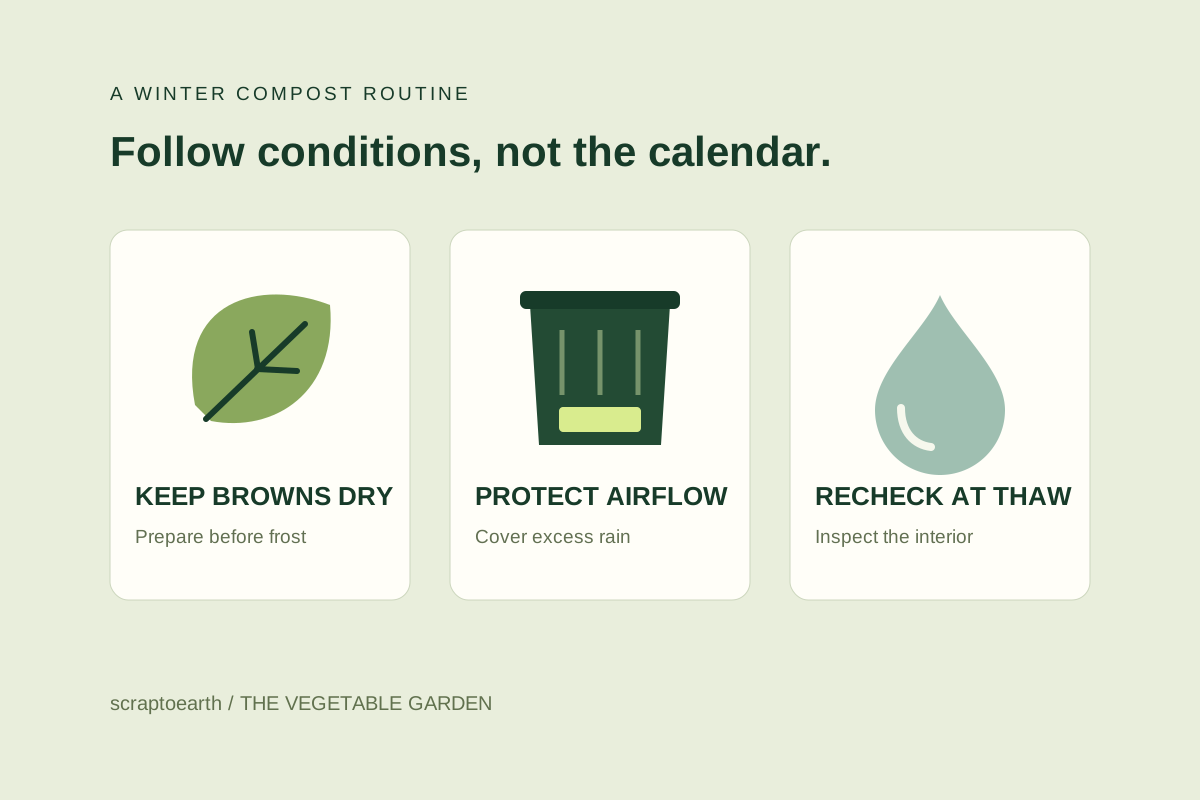
Distinguish a cold-climate winter from a mild one
Illinois Extension’s winter factsheet explains that cooler conditions slow decomposition, while a small pile can freeze and stop active composting. A larger pile may retain more heat, but that does not guarantee that your container will remain active.
In a climate with sustained freezing, the useful goal may be orderly collection until thaw. In a mild winter, continue inspecting the contents rather than changing the routine solely because the calendar says January. Rain and cold are separate conditions: a wet, unfrozen pile still needs attention to drainage and air spaces.
Prepare the route and browns before difficult weather
Make a winter plan while the bin is still easy to reach. Put dry browns in a convenient container, check that the lid opens, and identify where fresh scraps will go if snow, ice or a full bin interrupts the routine. Use the material checker to keep the accepted list consistent.
Choose a simple backup instruction everyone in the household can follow. For example, label a temporary collection container with the intended destination and check when that destination accepts material. If you cannot safely reach or manage the bin, using a local collection service or pausing outdoor additions is a reasonable plan. Illinois Extension lists alternative food-scrap services among winter options.
Protect the pile without sealing out air
The Illinois factsheet recommends protection from excessive precipitation while preserving airflow. It also advises reducing or stopping turning during sustained freezing to conserve heat. Insulating a pile may help retain heat, but it does not remove the effects of a long freeze.
University of Maryland Extension similarly advises against winter turning that releases heat. Apply that advice to genuinely cold conditions, not as a reason to ignore a waterlogged pile during a mild spell. Check the condition you have before choosing an action.
Treat frozen material as unfinished
If the mass is frozen, do not force a mixing tool or rotation mechanism through it. Follow the equipment instructions and focus on keeping additions contained and the area accessible. Make a note of how much unfinished material has accumulated, so spring planning includes that volume.
Freezing is not a maturity test or evidence of pathogen destruction. Do not move recognizable winter scraps into a vegetable bed and call them finished compost. Use the same ingredient restrictions you would use in summer, and keep active material separate from any mature batch you already have.
Reassess the pile after thaw
Illinois Extension’s spring restart guide recommends checking for damaged bins and unintended debris, then assessing moisture. After thaw, a soggy pile does not need more water; a dry pile may need gradual moistening and mixing.
Inspect the structure, break apart accessible mats and review the balance of stored materials. Use the compost troubleshooter if activity remains low. Our slow compost guide helps distinguish moisture, ingredients and particle size. Keep winter dates in your batch record, and let observable maturity determine when the material reaches the garden.
Written for ordinary outdoor home composting. Ingredient guidance and timing can vary with your climate and setup; linked public resources provide further detail.