
Troubleshooting
Why Is My Compost Not Breaking Down?
Recognizable scraps do not always mean the whole pile has failed. Check a few conditions inside the material, then make a targeted adjustment you can observe instead of adding water and greens automatically.
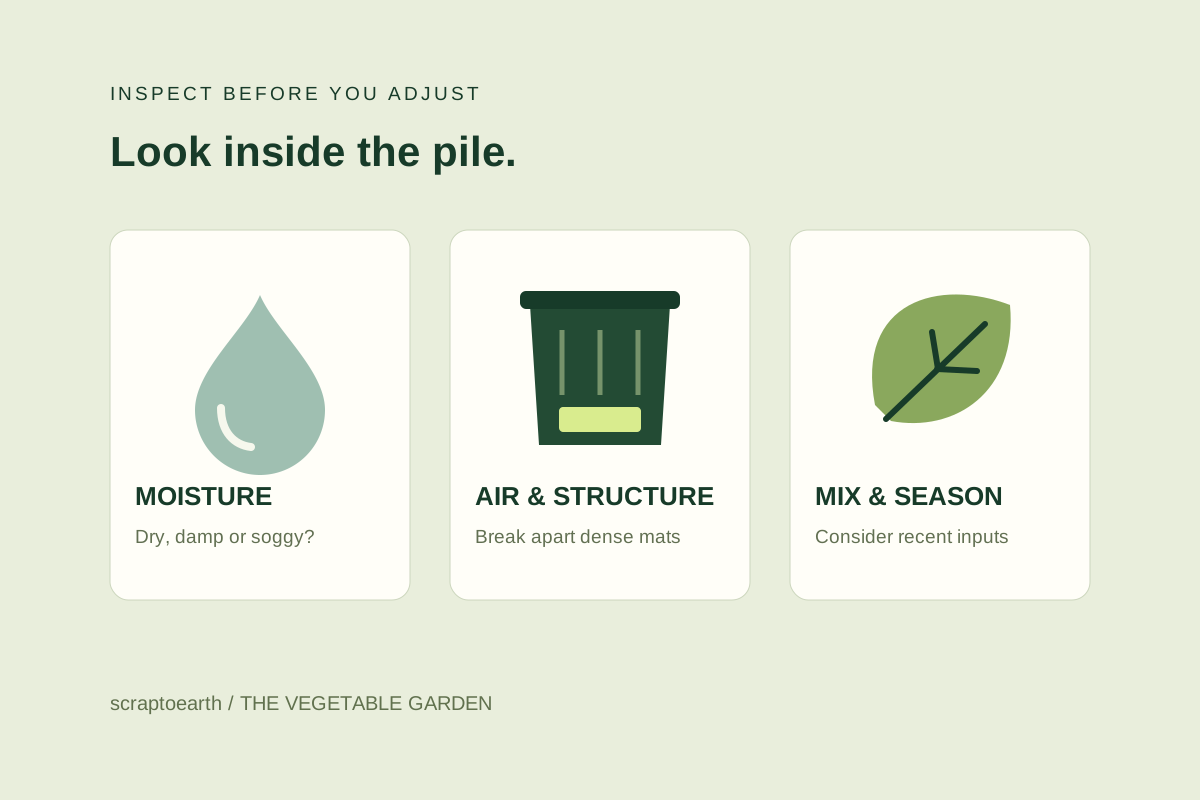
First, define what has stopped changing
Note the batch’s start date, the last fresh addition and the recent weather. Check more than the dry-looking top layer. In a continuously fed bin, new material and older material are not the same age, so compare a marked batch or a consistent part of the pile.
Write down three observations before intervening: how the interior feels, how it smells, and which materials remain recognizable. Take a photograph from the same angle for your own record. The compost troubleshooter can help organize these clues, but it cannot confirm compost maturity or sanitation from a few answers.
Check moisture before adding more water
Cornell’s troubleshooting chart identifies dryness as one reason a pile fails to heat, while wetness and inadequate air can contribute to unpleasant odors. A cool pile is not automatically a dry pile.
Inspect several accessible areas with a tool. If the material is dry, introduce water gradually while mixing so that it reaches the interior. If the mass is wet and dense, loosen it and mix in suitable dry, bulky browns. Pause before adding another wet load. Cornell recommends adjusting drainage and structure when soggy conditions are part of the problem.
Look for large pieces and compacted layers
Penn State’s home guide explains that smaller pieces give decomposers more accessible surface and that wet leaves or grass can clump. A whole stalk or a tight mat may persist while material nearby changes.
Break apart dense layers and cut large, tough scraps before future additions. You do not need to grind everything into a paste. Keep the inspection specific: “large cardboard sheets” tells you more than “too many browns.” Revisit the material checker if an ingredient itself is uncertain.
Review the mix and the amount of material
Cornell also identifies small pile size and insufficient nitrogen as possible reasons for low heat. Those are possibilities to investigate, not instructions to add grass to every cool bin. A damp, non-smelly pile dominated by dry woody material presents a different question from a wet bin full of vegetable scraps.
Compare recent inputs with the greens and browns guide. If the setup holds only a small amount, accept that it may not retain the heat of a large managed batch. Do not exceed the container’s usable capacity or block its openings in pursuit of a temperature target.
Allow for cold weather and your chosen method
UConn Extension explains that decomposition slows in cold weather and that home systems can work with different levels of attention. Illinois Extension notes that small piles can freeze, halting active composting until conditions change.
If the contents are frozen, follow our winter routine rather than trying to force a frozen mass apart. For an unfrozen pile, record one appropriate adjustment and inspect the same areas at your next check. Look for a change in texture, smell and recognizable material; avoid promising yourself a fixed completion date.
Written for ordinary outdoor home composting. Ingredient guidance and timing can vary with your climate and setup; linked public resources provide further detail.